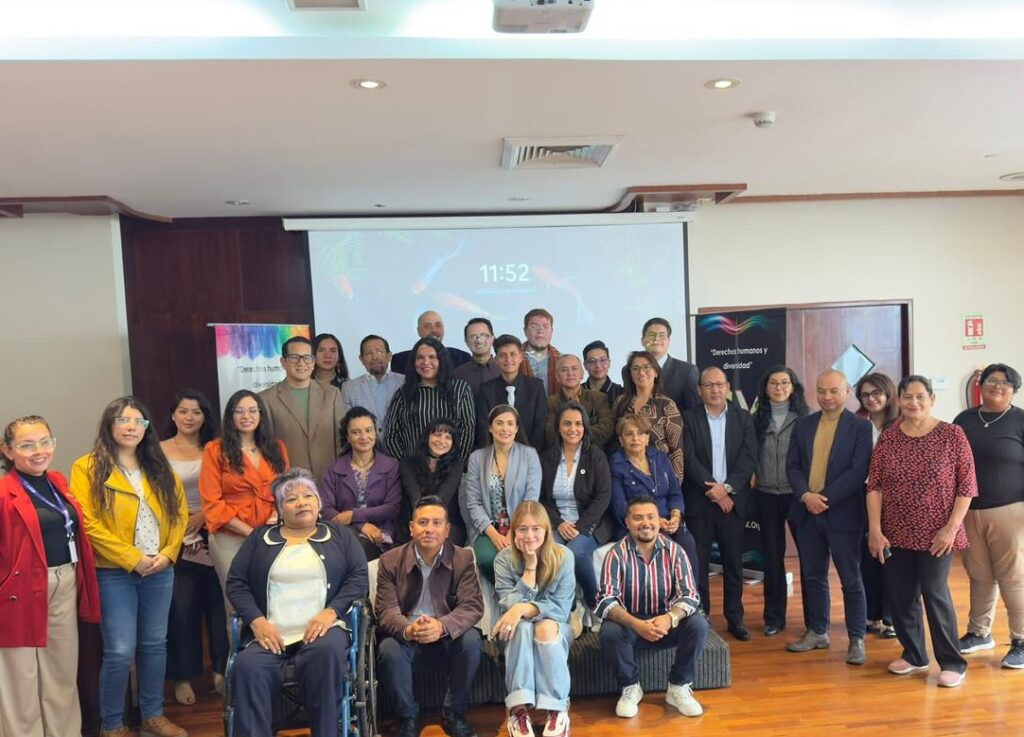
Guayaquil and Quito, November 20, 2025
The Silueta X Association and the Johns Hopkins University (JHU) Bloomberg School of Public Health have successfully completed the dissemination of preliminary results from their qualitative study, “Diverse Gender Identities and Implications for the Civil Registry and Vital Statistics (CRVS).” High-level events were held in Guayaquil (November 11) and Quito (November 19) to present the findings.
The study, led by Dr. Michelle R. Kaufman (JHU Principal Investigator), alongside Ecuadorian researchers Marcela Benavides and Mgs. Diane Rodríguez (President of Silueta X), detailed how the lack of congruence between transgender individuals’ gender identity and their official documentation creates a systematic barrier to the full exercise of their rights.
Key Findings: The “Domino Effect” of Documentary Incongruence
The qualitative investigation, which included participants in Guayaquil, identified a negative “domino effect” resulting from bureaucratic inconsistencies, alerting institutions to the following critical issues:
Mental Health and Well-being
The persistent use of the “dead name” in public records and services, compounded by chronic discrimination, generates high levels of stress, anxiety, depression, and dysphoria among the Trans and gender-diverse population, severely impacting their quality of life.
Barriers to Employment and Education
Inter-institutional inconsistencies and documentation errors perpetuate discrimination in hiring and enrollment processes. The findings show that these barriers force many Trans women into informal work or sex work, despite their academic preparation, nullifying opportunities for productive inclusion.
Institutional Violence and Administrative Hostility
Participants reported being victims of frequent gender errors, mockery, and ignorance from health workers, as well as administrative hostility in various institutions. Furthermore, documentary incongruence makes them a target for police abuse and other security forces.
Expert Conclusions and Call for Inter-institutional Action
Dr. Michelle R. Kaufman emphasized the importance of inclusive data to position Ecuador as a global benchmark for gender equity. Silueta X researchers issued an urgent call to the authorities present in Quito (including ministries and secretariats) to take action.
“Our data demonstrates that while Ecuador has advanced legally with gender recognition [on the ID card], the lack of data system integration and the absence of inclusive protocols in institutional practice nullify these advances,” noted Marcela Benavides, Principal Investigator.
“Legal gender alignment correlates with greater self-esteem and security, which is why institutions must act to ensure this right is reflected in all public services,” she concluded, urging entities like the Civil Registry, the Foreign Ministry, and INEC to coordinate efforts to eradicate bureaucratic barriers affecting the mental health and security of the Trans population.
Silueta X reaffirmed that the study has strengthened its commitment to inclusive research, demonstrating community resilience and the need for methodological flexibility in public policy. This study marks a fundamental step toward creating more equitable policies in the country.
Contact for interviews and further information: Zack Elías – Asociación Silueta X Email: info@siluetax.org | Phone: 0981339708 – 0982001871